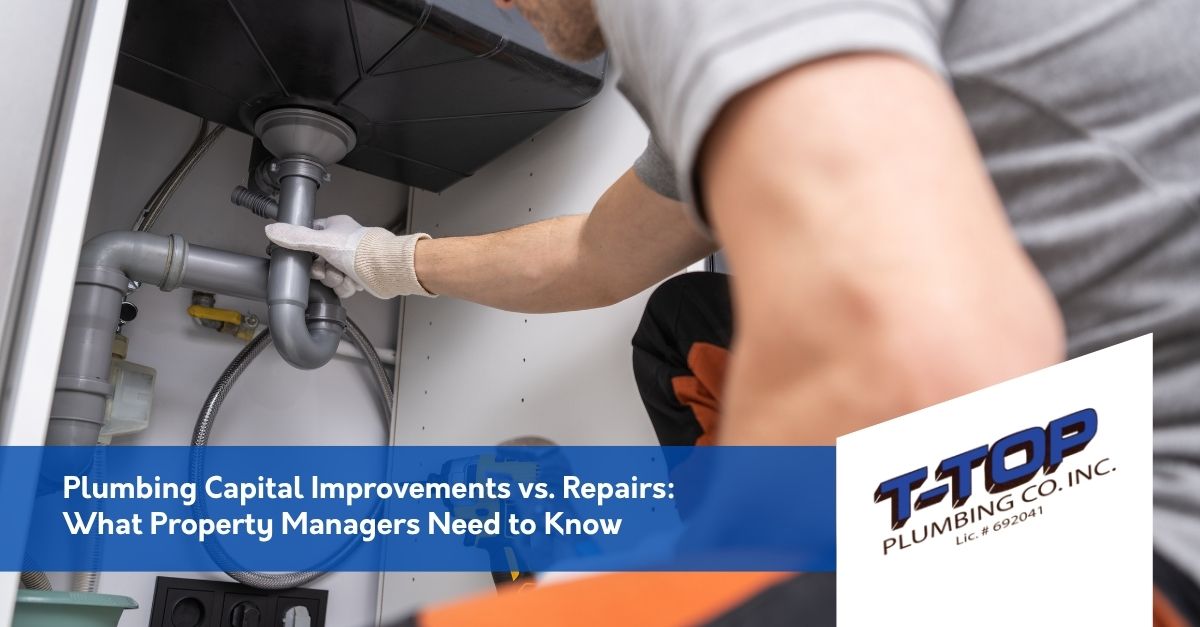
When a pipe bursts at midnight or a water heater gives out mid-winter, most property managers don’t stop to think about accounting classifications. But how you categorize a plumbing capital improvement as a capital improvement or a routine repair can have real consequences for your budget, your taxes, and your long-term asset management strategy.
The distinction matters more than many people realize. Get it right, and you can optimize your tax deductions, plan capital expenditures more effectively, and keep your property in better shape over time. Get it wrong, and you risk misallocating costs, underreporting assets, or creating compliance headaches down the line.
This guide breaks down exactly what separates a plumbing capital improvement from a repair, how to tell them apart in practice, and what property managers in the Ventura and Los Angeles area should keep in mind when making plumbing decisions.
What Counts as a Plumbing Capital Improvement?
A capital improvement is any work that adds value to a property, extends its useful life, or adapts it to a new use. In plumbing terms, this typically means replacing or upgrading a major system component rather than simply fixing what’s broken.
Common examples include:
- Full repiping of a building — Replacing old galvanized or polybutylene pipes with copper or PEX throughout the property is a textbook capital improvement. The work extends the lifespan of the plumbing system and increases the property’s overall value.
- Installing a new water heater — When a water heater reaches end-of-life and is replaced entirely, that’s a capital expense—especially if the new unit is a higher-capacity or more energy-efficient model.
- Adding plumbing to a new space — Any new plumbing installed as part of a room addition, ADU, or major remodel qualifies as a capital improvement because it expands the property’s functional capacity.
- Upgrading to a tankless water heating system — Replacing a traditional tank with a tankless unit represents a material upgrade, not a like-for-like repair.
From an accounting standpoint, capital improvements are typically depreciated over time rather than expensed in the year they occur. Consult your accountant or tax advisor for guidance specific to your situation, since IRS rules around property improvements can be nuanced.
What Counts as a Plumbing Repair?
Repairs, by contrast, restore something to its original working condition without materially adding value or extending its useful life. They’re the day-to-day fixes that keep a property functional.
Typical plumbing repairs include:
- Fixing a leaky faucet or running toilet
- Clearing a blocked drain or sewer line
- Patching a small section of damaged pipe
- Replacing a faulty valve, flapper, or showerhead
- Repairing a water heater’s heating element without replacing the unit
Repairs are generally expensed in the year they occur, making them immediately deductible as ordinary business expenses. For property managers watching monthly cash flow, this is often the more attractive short-term option.
How to Tell the Difference: A Practical Framework
The line between a repair and a capital improvement isn’t always obvious. A few guiding questions can help:
Does the work restore the property to its previous condition, or does it improve upon it?
Replacing a broken section of pipe with the same type of pipe is a repair. Replacing an entire aging pipe system with a modern alternative is an improvement.
Is this a one-off fix or a systemic change?
Clearing a blocked drain is a repair. Installing a new drainage system because the existing one is chronically failing is a capital project.
Does the work affect a major component of the plumbing system?
The IRS uses a “major component or substantial structural part” standard when evaluating improvements. A water main, the building’s entire drain-waste-vent system, or a central water heating system would typically qualify as major components.
What’s the cost relative to the asset’s value?
While cost alone doesn’t determine classification, a significant expenditure on a long-lived asset often signals a capital improvement. Very small, isolated fixes are almost always repairs.
When in doubt, document your reasoning and consult a CPA familiar with real estate and property management.
Why This Distinction Matters for Property Managers
Beyond accounting, the capital vs. repair distinction shapes how you plan and prioritize plumbing work across your portfolio.
Budgeting and Cash Flow
Repairs are recurring and often unpredictable. Capital improvements are larger, planned expenditures. Keeping a clear record of each helps you build a more accurate annual budget and avoid being blindsided by major system failures that should have been anticipated.
Properties with aging plumbing infrastructure—particularly those with original galvanized pipes or outdated fixtures—tend to accumulate repair costs that eventually outpace the cost of a capital upgrade. At some point, the math tips in favor of the improvement.
Property Value and Tenant Retention
Updated plumbing systems are a selling point for commercial tenants and a baseline expectation for residential ones. A building that suffers repeated water pressure issues, slow drains, or water heater failures will struggle to retain tenants regardless of other amenities. Strategic capital investments in plumbing protect occupancy rates and the long-term value of your asset.
Regulatory Compliance
In Ventura and Los Angeles counties, local codes and water authority requirements can influence what work qualifies as a repair and what triggers permitting requirements for improvements. Repiping a multi-unit residential building, for example, will almost certainly require permits and inspections. Partnering with a licensed plumbing contractor who understands local regulations protects you from compliance issues after the fact.
Red Flags That a “Repair” Is Really a Capital Project in Disguise
Some property managers understandably prefer to classify work as repairs to capture immediate deductions. But certain patterns suggest a property’s plumbing needs go beyond routine maintenance:
- Recurring leaks in the same location or pipe material — This often signals systemic deterioration, not isolated damage.
- Frequent water heater repairs on a unit over 10–12 years old — At this stage, replacement is usually more cost-effective than continued patching.
- Chronic low water pressure across multiple units — This can indicate widespread pipe corrosion or undersized supply lines that only a system-level fix will resolve.
- Multiple drain or sewer backups within a short period — Repeated blockages in the same line may point to root intrusion, pipe collapse, or poor original installation that requires a capital solution.
Catching these patterns early lets you plan and budget for improvements before an emergency forces your hand.
Working with the Right Plumbing Partner
For property managers in Ventura and Los Angeles counties, the quality of your plumbing contractor directly affects both the quality of the work and the accuracy of how it gets classified. A full-service plumbing contractor can assess whether a problem calls for a repair or a more comprehensive improvement, provide detailed documentation of the scope of work, and handle everything from a single faucet fix to a complete repipe.
T-Top Plumbing has been serving Simi Valley and the surrounding communities for over 25 years. As a family-owned, full-service plumbing contractor, we handle everything from ground-up plumbing installations on custom homes and room additions to everyday repairs on residential and commercial properties. Our familiarity with local codes, water systems, and the unique demands of Ventura and LA County properties means property managers get clear, practical guidance—not just a work order.
Make Smarter Plumbing Decisions for Your Portfolio
Understanding the difference between capital improvements and repairs isn’t just an accounting exercise. It’s a foundation for better property management: smarter budgeting, fewer emergency calls, stronger asset value, and cleaner records come tax time.
If you’re unsure whether your next plumbing project is a repair or an improvement—or if you want a professional assessment of your property’s plumbing health—reach out to the team at T-Top Plumbing. We’ll give you a straight answer and a plan that fits your property and your budget.
[/fusion_text][/fusion_builder_column][/fusion_builder_row][/fusion_builder_container]