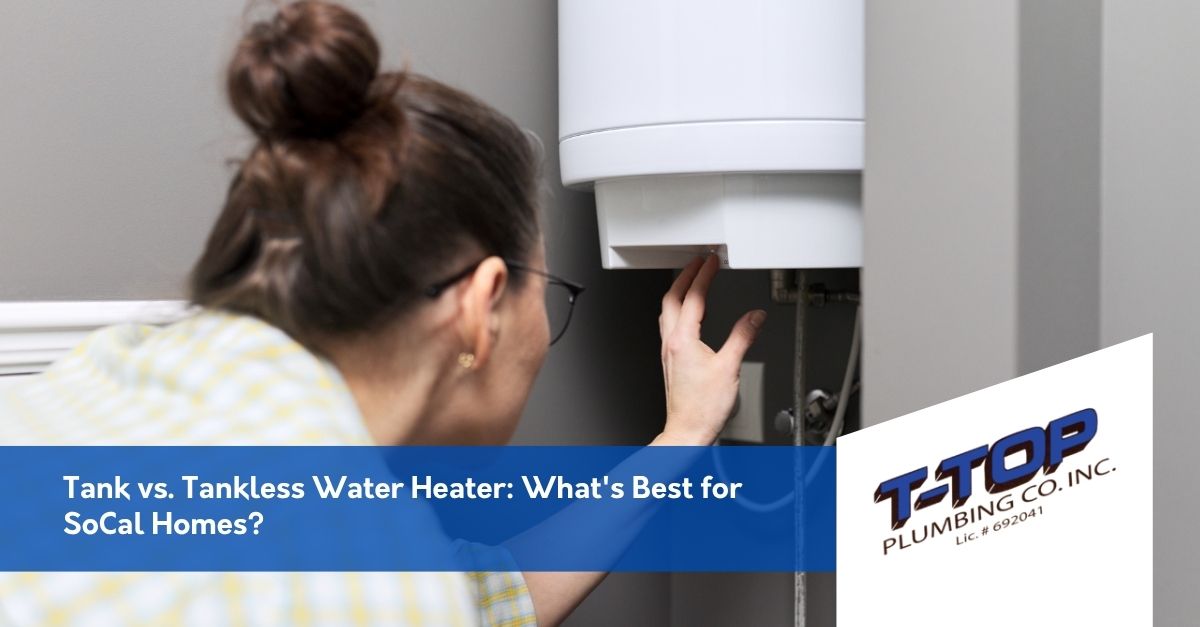
Replacing a water heater is one of those decisions most homeowners only think about when their old unit fails. By then, you’re often making a rushed choice under pressure—with a cold shower on the line. But choosing between a traditional tank and a tankless water heater deserves a little forethought, especially here in Southern California where water conditions, energy costs, and climate all play a role.
At T-Top Plumbing, we’ve spent over 25 years installing and servicing water heaters across Ventura and Los Angeles counties. We’ve seen which systems thrive in local homes, and which ones leave homeowners frustrated. This guide breaks down the real differences between tank and tankless water heaters so you can make a confident choice that fits your household, your budget, and your long-term plans.
How a Tank Water Heater Works
A traditional storage tank water heater does exactly what the name suggests. It heats and stores a large volume of water—usually between 40 and 80 gallons—inside an insulated tank. The water stays hot and ready, so when you turn on a faucet or step into the shower, you get warm water right away.
The tradeoff? That tank is constantly working to keep the stored water hot, even when no one’s home. This is called standby heat loss, and it’s one of the main reasons tank heaters tend to cost more to run over time.
Pros of Tank Water Heaters
- Lower upfront cost. Tank units are generally cheaper to buy and install than tankless models.
- Simple installation. If you’re replacing an existing tank, the swap is usually straightforward.
- Reliable for simultaneous use. A properly sized tank can handle a few fixtures running at once without much trouble.
Cons of Tank Water Heaters
- Higher energy bills. Standby heat loss adds up month after month.
- Limited hot water. Once you drain the tank, you wait for it to reheat.
- Bulky footprint. Tanks take up significant garage or closet space.
- Shorter lifespan. Most tank heaters last about 8 to 12 years.
How a Tankless Water Heater Works
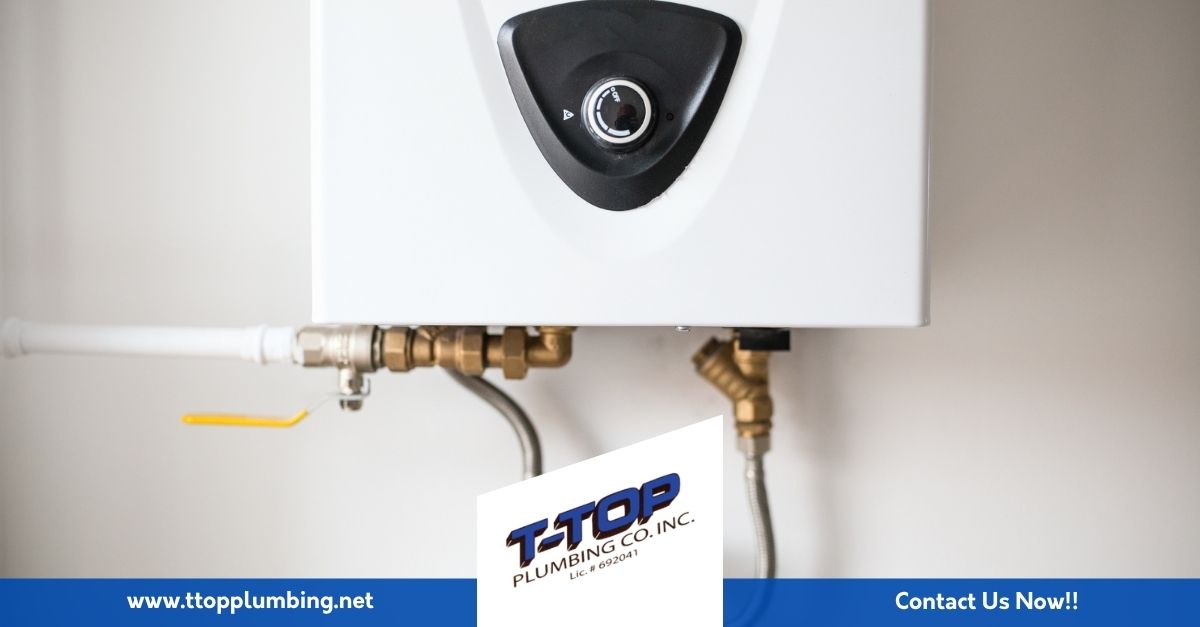
A tankless water heater—sometimes called an on-demand heater—skips the storage tank entirely. Instead, it heats water only when you need it. When you open a hot water tap, cold water runs through the unit, where a gas burner or electric element heats it instantly.
Because there’s no tank constantly reheating water, you avoid standby heat loss. You also get a continuous supply of hot water, which is great for back-to-back showers or running a load of laundry while the dishwasher hums along.
Pros of Tankless Water Heaters
- Endless hot water. As long as you don’t exceed the unit’s flow rate, you won’t run out.
- Energy savings. Tankless models can be significantly more efficient, especially in homes that use less hot water.
- Compact design. These units mount on a wall and free up floor space.
- Longer lifespan. Many tankless heaters last 20 years or more with proper maintenance.
Cons of Tankless Water Heaters
- Higher upfront cost. Both the unit and installation cost more than a comparable tank.
- Flow rate limits. A single unit may struggle to supply several high-demand fixtures at once.
- Possible upgrades needed. Older homes may need new gas lines, venting, or electrical work to support a tankless unit.
Why Southern California Conditions Matter
The tank-versus-tankless debate isn’t one-size-fits-all. Where you live shapes which option makes the most sense, and Southern California brings a few specific factors into play.
Hard Water Is Common Here
Much of Ventura and Los Angeles counties deal with hard water—water that’s high in minerals like calcium and magnesium. Over time, these minerals build up inside any water heater. For tankless units, scale buildup can reduce efficiency and shorten lifespan if the system isn’t flushed regularly. If you go tankless in a hard-water area, pairing it with a water softener or committing to annual descaling is smart. T-Top Plumbing can handle that maintenance for you.
Mild Climate Helps Tankless Efficiency
Tankless heaters have to work harder when incoming groundwater is very cold. Southern California’s mild climate means the water entering your home isn’t freezing the way it might be in a northern state. That gives tankless units a head start, since they don’t have to raise the water temperature as dramatically. The result is better real-world efficiency for many local homes.
Energy Costs Add Up
California has some of the higher energy rates in the country. Over the lifespan of your water heater, the efficiency of a tankless unit can translate into meaningful savings—especially for households mindful of their utility bills.
Which Water Heater Is Right for Your Home?
There’s no universal winner. The best choice depends on your household size, hot water habits, budget, and how long you plan to stay in your home.
A tank water heater may be the better fit if you:
- Want the lowest upfront cost
- Are replacing an existing tank and want a simple swap
- Have a large household with several fixtures running at once
- Plan to move within a few years
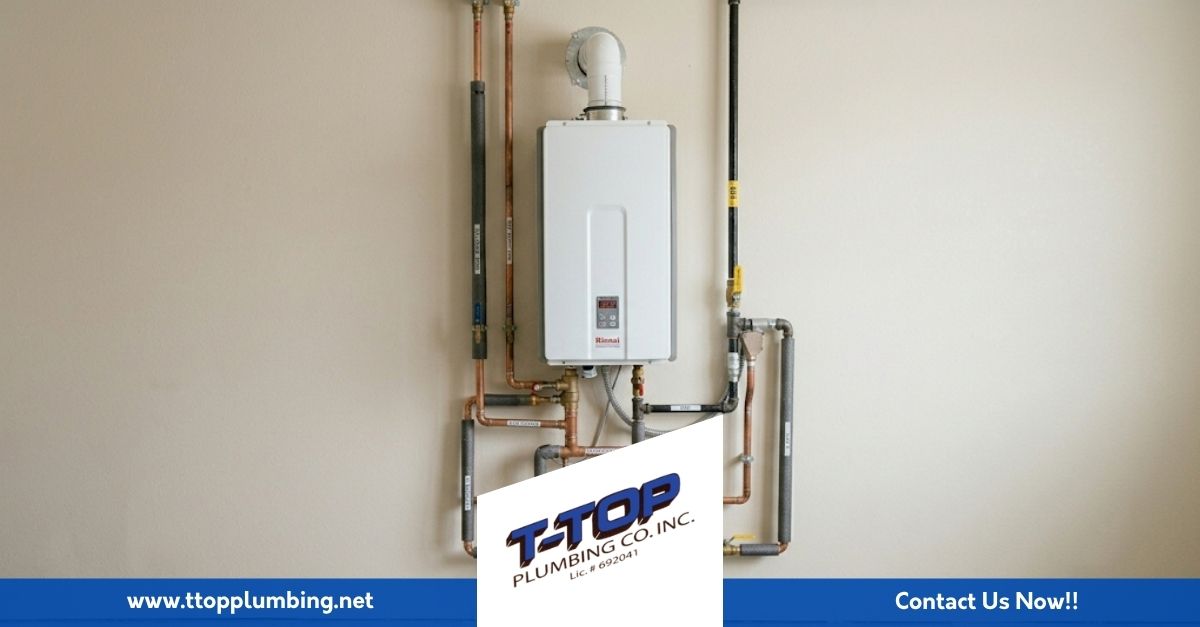
A tankless water heater may be the better fit if you:
- Want lower energy bills over the long haul
- Value endless hot water for back-to-back use
- Want to free up floor space
- Plan to stay in your home for many years and want a unit that lasts
If you’re still on the fence, it helps to talk through your specific setup with a professional who knows local homes. Square footage, existing gas and electrical capacity, and your daily routine all factor into the decision.
Make the Right Call With T-Top Plumbing
Choosing a water heater shouldn’t feel like a gamble. As a family-owned, full-service plumbing contractor serving Simi Valley and surrounding communities for over 25 years, T-Top Plumbing helps homeowners weigh their options and install the right system the right way—the first time.
Whether you’re remodeling, building a custom home, or simply replacing an aging unit, our team can assess your home, recommend the best fit, and handle the installation from start to finish. We work on both residential and commercial properties across Ventura and Los Angeles counties.
Ready to upgrade your water heater? Reach out to T-Top Plumbing today for honest advice and expert installation you can count on.