If you live in Ventura County, you’ve probably noticed it. The chalky white crust on your faucets. The soap that never quite lathers. The water spots that reappear on your dishes minutes after you’ve dried them. These are all telltale signs of hard water, and across our region, it’s a daily reality for thousands of homeowners.
Hard water isn’t just an annoyance. Over time, it can quietly damage your plumbing, shorten the life of your appliances, and cost you money in repairs and higher energy bills. The good news? Once you understand what’s happening behind your walls, the problem becomes much easier to manage.
This guide breaks down what hard water is, why it’s so common in Ventura County, how it affects your pipes and fixtures, and the practical fixes that actually work. As a family-owned plumbing contractor serving Ventura and Los Angeles counties for over 25 years, we’ve seen firsthand what hard water does to a home—and what it takes to fix it.

What Is Hard Water, Exactly?
Hard water is water with a high concentration of dissolved minerals, primarily calcium and magnesium. As rainwater moves through soil and rock, it picks up these minerals along the way. By the time it reaches your tap, it carries a mineral load that affects nearly everything it touches.
Water hardness is measured in grains per gallon (gpg) or parts per million (ppm). Anything above 7 gpg is generally considered hard, and many areas in Ventura County sit well above that threshold. The minerals themselves aren’t harmful to drink, but they wreak havoc on your home’s plumbing system over time.
Why Is Ventura County Water So Hard?
Much of Southern California, including Ventura County, draws water from sources rich in natural minerals. Groundwater pulled from local aquifers travels through mineral-heavy soil and rock formations, absorbing calcium and magnesium along the route. Imported water from the Colorado River, which supplies parts of the region, is also notoriously hard.
The combination of these sources means residents in Simi Valley, Thousand Oaks, Camarillo, and surrounding cities frequently deal with some of the harder water in the state. It’s not a flaw in the water system—it’s simply the nature of where our water comes from.
How Does Hard Water Affect Your Pipes?
This is where hard water causes the most damage, often out of sight until it becomes a serious problem.
Scale Buildup Inside Pipes
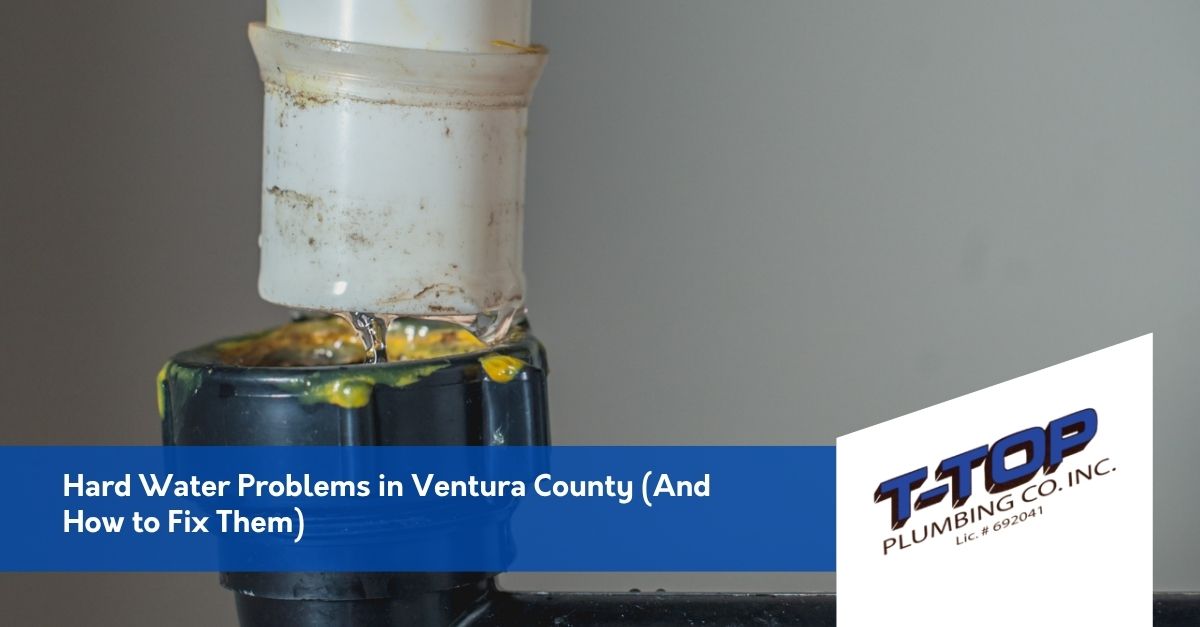
As hard water flows through your plumbing, calcium and magnesium gradually deposit on the inner walls of your pipes. This buildup, known as limescale, narrows the diameter of the pipe over time. The result is reduced water pressure, slower flow, and eventually, blockages that can require professional intervention.
Older galvanized steel and copper pipes are especially vulnerable. As scale accumulates, it restricts flow and creates rough surfaces where even more minerals can cling. What starts as a thin layer can eventually choke a pipe almost entirely.
Corrosion and Leaks
Mineral deposits don’t just clog pipes—they can also accelerate corrosion at joints and connections. Over the years, this stress contributes to pinhole leaks, weakened fittings, and in worst cases, burst pipes. Repairing or replacing damaged sections of pipe is far more expensive than addressing the hard water problem at the source.
Strain on Your Water Heater
Your water heater takes a particularly hard hit. Heat speeds up mineral deposition, so scale collects rapidly at the bottom of the tank. This sediment forces the heater to work harder to warm your water, driving up energy costs and shortening the unit’s lifespan. Many water heaters that should last 10 to 12 years fail well before then because of hard water buildup.
Signs You Have a Hard Water Problem
Not sure if hard water is affecting your home? Watch for these common indicators:
- White, chalky residue on faucets, showerheads, and fixtures
- Soap and shampoo that won’t lather properly
- Spots and film on dishes and glassware after washing
- Dry skin and dull, brittle hair after showering
- Stiff, scratchy laundry even with detergent
- Declining water pressure throughout the home
- Higher energy bills with no clear explanation
If several of these sound familiar, hard water is likely the culprit.
How to Fix Hard Water Problems
The most effective solutions tackle the problem at its source. Here are the options that work best for Ventura County homes.
Install a Water Softener
A whole-house water softener is the gold standard for treating hard water. It works by removing calcium and magnesium through a process called ion exchange, replacing those minerals with sodium or potassium. The result is soft water flowing to every tap, appliance, and fixture in your home.
Softened water protects your pipes from scale, extends the life of your water heater and appliances, and noticeably improves how your water feels. Soap lathers better, dishes come out cleaner, and your skin and hair feel softer. For most homeowners dealing with persistent hard water, a softener offers the biggest return.
Consider a Salt-Free Conditioner
If you’d prefer to avoid added sodium or reduce maintenance, a salt-free water conditioner is worth exploring. Rather than removing minerals, these systems alter their structure so they’re less likely to form scale. While they don’t deliver the slick feel of truly softened water, they still help protect your plumbing from buildup.
Flush Your Water Heater Regularly
Whether or not you install a treatment system, flushing your water heater once a year clears out accumulated sediment. This simple maintenance step improves efficiency and helps your unit last longer. It’s a job many homeowners prefer to leave to a professional, especially when paired with a full plumbing inspection.
Address Existing Pipe Damage
If hard water has already taken a toll, treating the water alone won’t reverse the damage. Severely scaled or corroded pipes may need cleaning or replacement to restore proper flow. A professional plumber can assess the condition of your system and recommend the right course of action.
Don’t Let Hard Water Wear Down Your Home
Hard water is one of the most common—and most overlooked—plumbing challenges in Ventura County. Left unchecked, it slowly damages your pipes, drains your appliances’ lifespan, and adds unnecessary costs to your monthly bills. But with the right approach, it’s a completely manageable problem.
Start by confirming whether hard water is affecting your home, then weigh your treatment options. A whole-house water softener, regular water heater maintenance, and timely repairs can keep your plumbing running smoothly for years to come.
If you’re ready to tackle hard water for good, T-Top Plumbing can help. As a family-owned, full-service plumbing contractor serving Ventura and Los Angeles counties for over 25 years, we handle everything from water softener installation to pipe repair and replacement. Reach out today to schedule an inspection and protect your home’s plumbing.