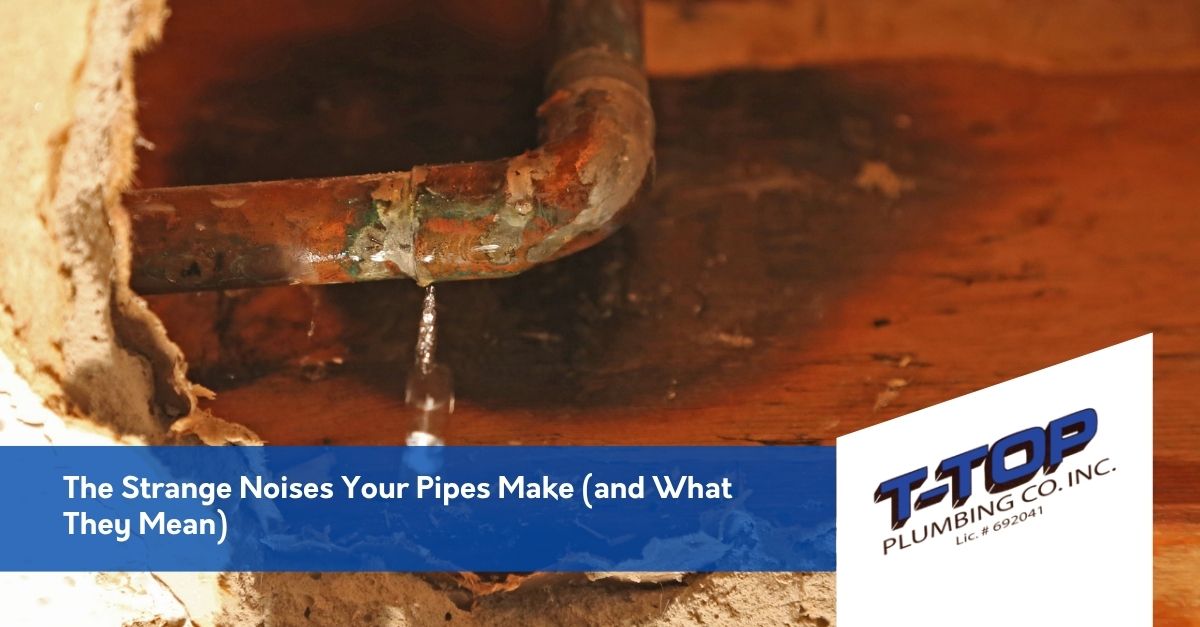
A quiet plumbing system is a happy plumbing system. Water should flow smoothly and silently to your faucets, and wastewater should drain away without causing a commotion. If you start hearing a symphony of strange noises echoing from behind your walls or under your floors, something is likely out of balance.
Understanding what your plumbing is trying to say can save you from costly water damage and unexpected breakdowns. Different sounds point to very different problems. Here is a breakdown of the most common noises your pipes make and exactly what they mean.
Banging and Hammering
A loud bang or hammering sound echoing through your walls when you shut off a faucet or an appliance is hard to ignore. This sudden, startling noise is incredibly common, but it should never be ignored.
What causes water hammer?
This phenomenon is officially known as “water hammer” (or hydraulic shock). Water is constantly flowing through your pipes under pressure. When you quickly close a valve—like turning off the kitchen sink or when your washing machine stops filling—that rushing water suddenly hits a closed barrier. The kinetic energy has nowhere to go, causing the water to violently crash against the valve and the pipe walls.
How to fix it
Modern homes are typically built with air chambers in the plumbing system to cushion this shock. Over time, these chambers can fill with water and lose their effectiveness. Draining your plumbing system can replenish the air in these chambers. If your home has mechanical water hammer arrestors, they may have failed and will require replacement by a professional.
High-Pitched Whistling
If your plumbing sounds like a tea kettle coming to a boil, you are likely dealing with a restriction in your water flow.
Pinpointing the squeal
System-wide whistling
If the whistling sound happens regardless of which fixture you use, the problem is likely tied to your home’s main water supply. Your main water pressure reducing valve (PRV) might be failing, or sediment could be building up inside the main lines. Excessive water pressure puts immense strain on your entire plumbing system, so having a plumber check your PRV is a smart move.
Bubbling and Gurgling
Water draining from your sink or bathtub should be relatively quiet. A bubbling or gurgling noise coming from your drains sounds like someone blowing bubbles into a glass of milk through a straw.
Searching for air
When water travels down your drain, it needs air behind it to flow smoothly. Your plumbing system achieves this through vent pipes that run up to your roof. If a drain line or a vent pipe is partially blocked, the draining water will pull air from the nearest possible source—often the P-trap of a nearby fixture. This creates the gurgling sound you hear.
Clearing the way
Minor gurgling can sometimes be fixed by clearing hair and debris from the drain itself. However, if multiple drains are gurgling simultaneously, you likely have a significant blockage in your main sewer line or a clogged roof vent. Tree roots, grease buildup, and foreign objects are common causes that require professional snaking or hydro-jetting.
Rhythmic Ticking
Hearing a steady “tick, tick, tick” coming from the walls or ceiling can be unsettling. Many homeowners immediately assume a pipe is dripping onto drywall or wood.
Thermal expansion
While a leak is always a possibility, a rhythmic ticking sound is often caused by thermal expansion. This usually happens with copper or CPVC hot water pipes. As hot water flows through a cold pipe, the material rapidly expands and rubs against the wooden studs or metal straps securing it in place. Once the water stops flowing, the pipe cools and contracts, causing the ticking sound to happen in reverse.
Resolving the tick
Since this is a natural physical reaction, it rarely poses an immediate danger to your plumbing. However, the noise can be incredibly annoying. A plumber can open the wall and adjust the pipe straps or install plastic glides to allow the pipe to expand and contract silently.
Humming and Vibrating
A low humming or vibrating sound that shakes the walls slightly is another noise that requires a bit of investigation.
High water pressure
The most common cause of vibrating pipes is excessively high water pressure. When water moves through your pipes too quickly, it forces the pipes to vibrate against the framing of your house. Normal residential water pressure should sit between 40 and 80 psi (pounds per square inch). Anything higher can lead to premature wear and tear on your pipes and appliances.
Loose fasteners
If your water pressure is perfectly fine, the humming might be caused by loose mounting straps. Over time, the fasteners holding your pipes to the wall studs can work themselves loose, allowing the pipes to vibrate freely when water runs through them. Securing these straps or adding acoustic insulation can quickly quiet the vibration.
Time to Call a Professional Plumber
Some minor plumbing noises can be resolved with a quick adjustment or a bit of drain cleaning. However, continuous hammering, intense whistling, or bubbling that affects multiple drains are signs that your system needs expert attention. Ignoring these sounds will not make them go away—it usually just leads to more extensive damage.
If your pipes are making noises you cannot identify, T-Top Plumbing is here to help. We have fully stocked trucks stationed all over Ventura and Los Angeles counties, meaning we can generally dispatch a professional plumber to your door the very same day you call. We understand that plumbing emergencies are stressful, which is why we do our best to help everyone, regardless of budget constraints.[/fusion_text][/fusion_builder_column][/fusion_builder_row][/fusion_builder_container]