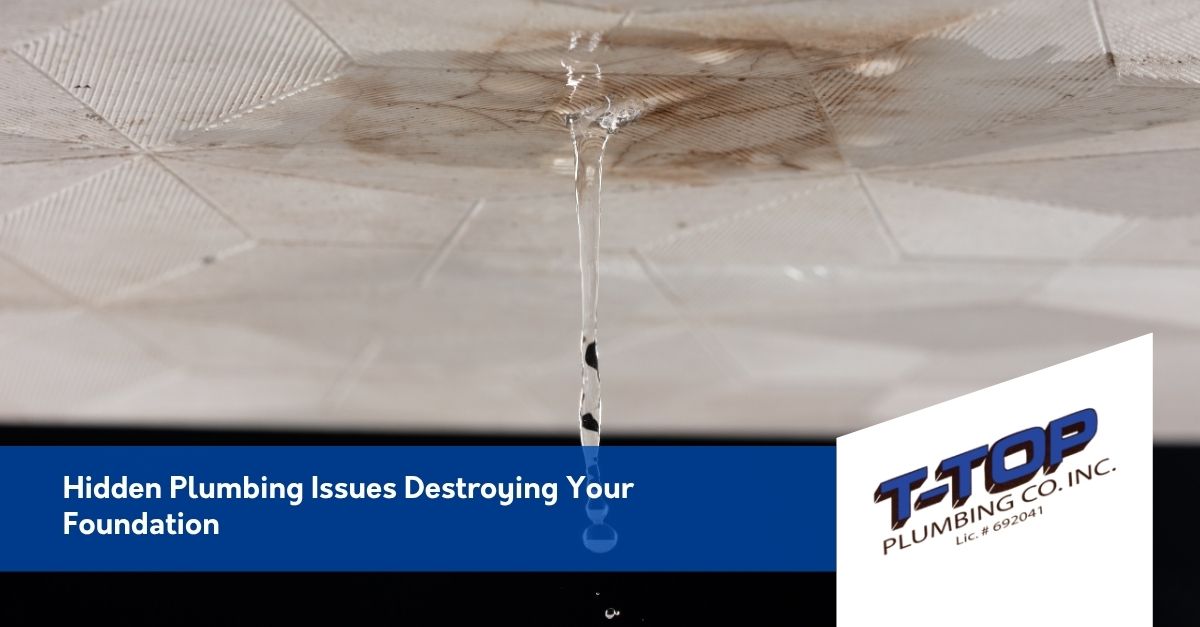
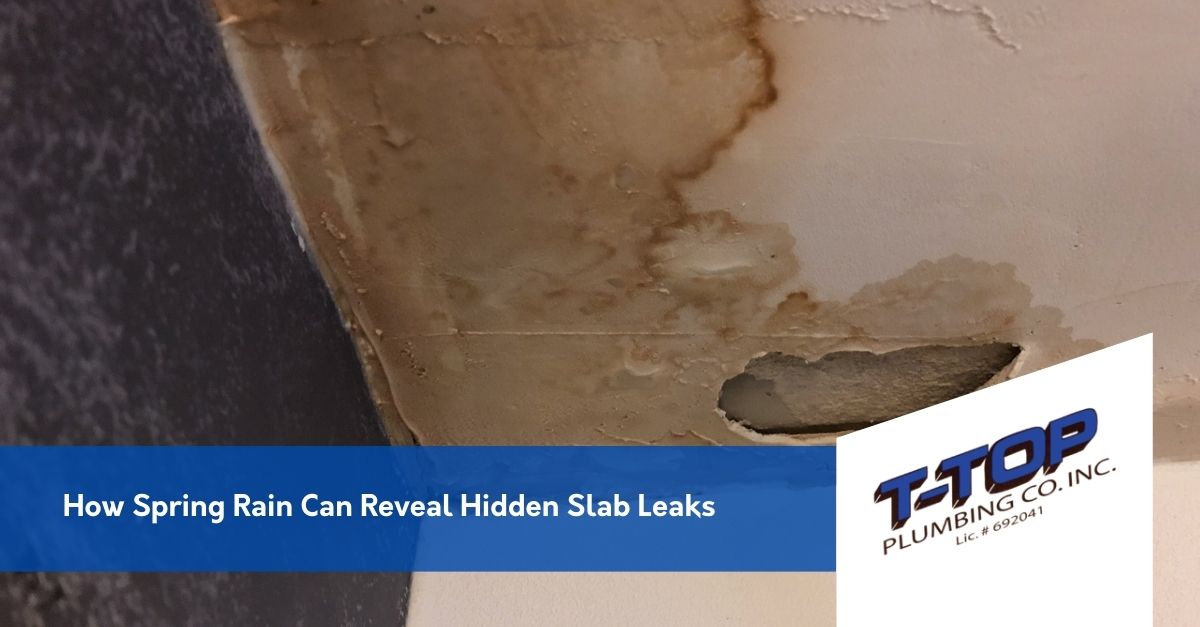
Southern California doesn’t get a lot of rain—but when it does, the effects can be surprisingly revealing. A few days of steady spring showers can expose plumbing problems that have been quietly developing beneath your home’s foundation for months, sometimes years. Slab leaks are often among the hidden issues that rainfall brings to light.
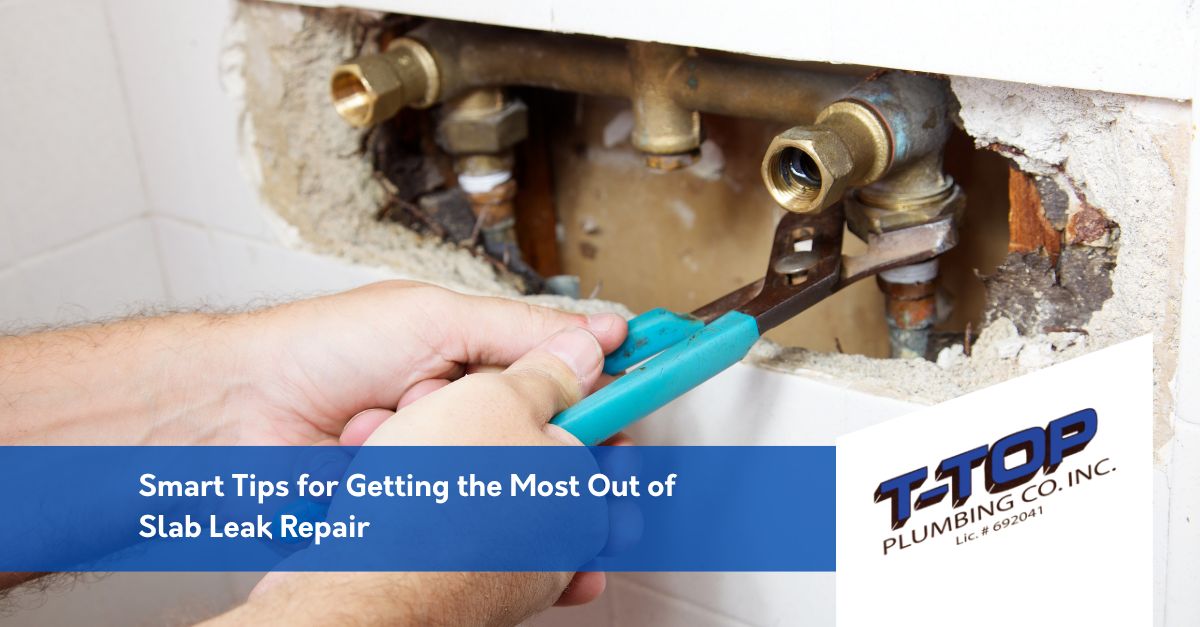
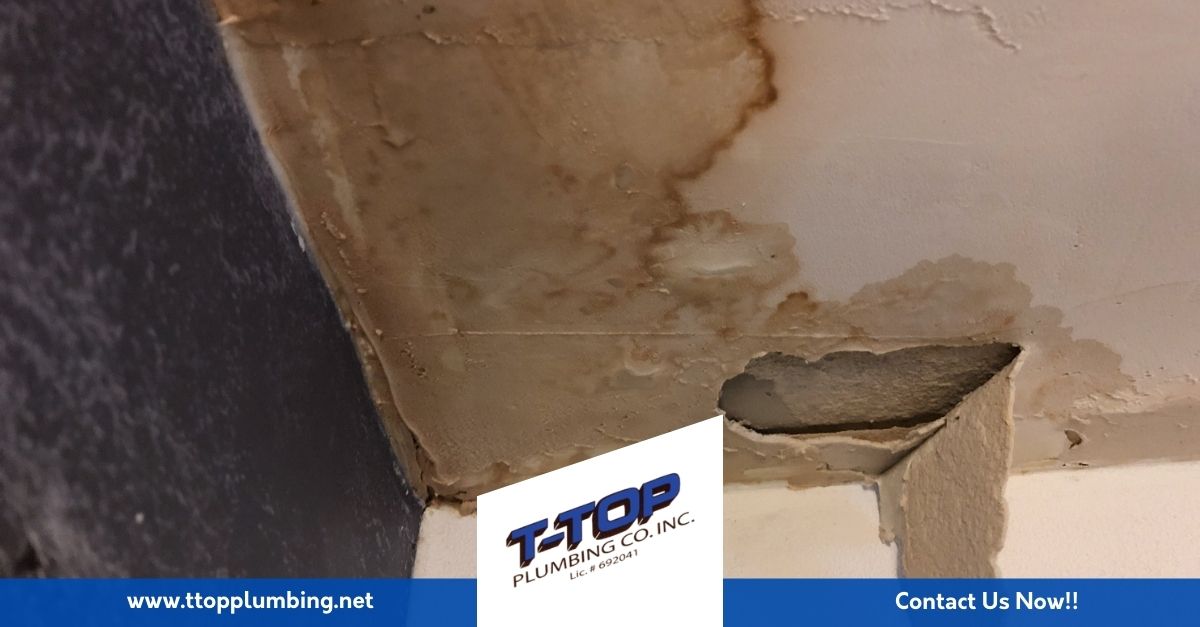
Slab leaks are among the most damaging (and costly) plumbing issues a homeowner can face. They occur when water supply or drain lines running beneath a concrete slab foundation begin to leak. Because these pipes are buried underground, the damage often goes unnoticed until the signs become impossible to ignore. Spring rain has a way of accelerating that process—making hidden leaks visible before they spiral into full-blown structural damage.
If you own a home with a slab foundation in Southern California, this is exactly the kind of information that could save you thousands of dollars. Read on to learn how seasonal rainfall interacts with your home’s foundation, why wet conditions cause existing leaks to worsen, and what warning signs to watch for as the weather changes.
Slab leaks
What Happens to Slab Foundations During Spring Rain
Southern California’s soil is particularly vulnerable to moisture-related movement. Much of the region sits on expansive clay-heavy soils that swell significantly when wet and contract sharply during dry spells. After a dry summer and fall, the first heavy rains of spring cause rapid soil expansion—and that movement puts enormous pressure on the pipes running beneath your home.
Concrete slab foundations are designed to distribute weight evenly across stable ground. But when the soil beneath them shifts, cracks can form in the slab itself. These cracks create new pathways for water to escape from pipes that were already under stress, and they can cause pipes that were barely leaking to rupture more significantly.
The result? A minor, undetected leak becomes a much bigger problem—sometimes within just a few weeks of sustained rainfall.
Water Pooling Around Your Foundation
One of the most visible signs of a slab leak after rain is water pooling around the base of your home. While some surface pooling is normal after heavy rainfall, water that lingers long after the rain has stopped is a red flag.
Here’s the key distinction: rainwater that pools temporarily and drains within a few hours is generally a drainage issue. Water that keeps reappearing near your foundation—even on dry days—suggests something is leaking from below. In many cases, this water is traveling upward through cracks in the slab and saturating the soil around the perimeter of your home.
Look out for:
- Wet or damp spots on your floor that don’t correspond to any visible surface water source
- Soft or spongy patches in carpeted areas or under flooring
- Puddles near exterior walls that persist well after the rain has stopped
- Efflorescence (white chalky deposits) on concrete or masonry, which indicates moisture is migrating through the slab
If you notice any of these signs, don’t wait. Water that travels upward through a slab will eventually damage flooring, walls, and the structural integrity of your foundation.
How Shifting Soil Stresses Underground Pipes
Spring rain doesn’t just introduce moisture—it destabilizes the ground your pipes sit in. As water saturates the soil, it can cause uneven settling beneath your slab. In some areas, soil erodes and creates voids; in others, it expands and heaves upward. Either scenario puts mechanical stress on your underground plumbing.
Copper pipes, which are common in older Southern California homes, are especially susceptible. Over time, they can develop pinhole leaks due to corrosion. When the soil shifts around them, those small weaknesses can widen quickly. Rigid pipes are also at risk—even a small amount of ground movement can crack a pipe at a joint or fitting.
Homes in Ventura and Los Angeles counties face an added challenge: many are built on hillside lots or in areas prone to soil movement due to the region’s complex geology. Spring rainfall compounds these existing vulnerabilities, making seasonal inspections especially important for homeowners in these areas.
Early Warning Signs of a Slab Leak
Catching a slab leak early can be the difference between a manageable repair and a major reconstruction project. Spring rain creates the right conditions for these leaks to reveal themselves—but only if you know what to look for.
Sudden Increase in Your Water Bill
A water bill that spikes without any change in your usage habits is one of the most reliable indicators of a hidden leak. If your bill jumps noticeably after a rainy period, don’t assume it’s just seasonal fluctuation. Check your water meter while all taps are off. If the dial is still moving, water is escaping somewhere in your system.
Hot Spots on the Floor
Hot water line leaks often manifest as warm patches on tile or hardwood floors. Run your bare feet across your floor after the house has been quiet for a few hours. Unusual warmth concentrated in one area—especially near a bathroom, kitchen, or utility room—warrants further investigation.
Sounds of Running Water
Can you hear water running when everything is turned off? That faint hissing or rushing sound could be water escaping through a crack in a pipe beneath your slab. It’s easy to dismiss as ambient noise, but it’s worth paying attention to, particularly after periods of heavy rain.
Cracks in Walls or Floors
New cracks appearing in your interior walls or floor tiles after rainy weather are worth taking seriously. While minor settling cracks are common in older homes, cracks that appear suddenly or widen over time may indicate slab movement caused by an underlying leak.
Mold, Mildew, or Musty Odors
Persistent moisture beneath a slab creates ideal conditions for mold growth. If you notice a musty smell that doesn’t go away after the rain clears, or visible mold along baseboards and walls, moisture may be wicking up through your foundation.
Why Southern California Homes Are Especially at Risk
Slab foundations are the standard in Southern California—and for good reason. They’re cost-effective, quick to build, and well-suited to the region’s generally dry climate. But that same dry climate means soil moisture levels fluctuate dramatically between seasons, which accelerates wear on underground plumbing.
Many homes in Ventura and Los Angeles counties were built in the mid-20th century, when copper piping was the industry standard. Decades of soil movement, mineral-rich water, and temperature cycling have left many of these pipes in a fragile state. Spring rain—especially after prolonged dry periods—is often the final stressor that triggers a leak.
Newer homes aren’t immune, either. Even modern PEX piping can be compromised by aggressive soil movement or poor installation near areas with high moisture variability.
The Case for Electronic Leak Detection
Traditional methods of locating slab leaks often involved significant disruption—digging up floors, cutting through walls, and making educated guesses about where the problem originated. Modern electronic leak detection has changed all of that.
T-Top Plumbing uses advanced electronic leak detection technology to pinpoint the exact location of underground slab leaks and sewer leaks—without unnecessary excavation. This approach uses acoustic sensors, pressure testing, and electromagnetic equipment to trace the source of a leak with remarkable precision. For homeowners in Ventura and Los Angeles counties, this means faster diagnosis, less property damage, and more targeted repairs.
If spring rain has stirred up any of the warning signs described above, electronic leak detection is the logical first step—not a jackhammer.

Protect Your Home Before Small Leaks Become Big Problems
Spring rain serves as an annual stress test for your home’s foundation and plumbing. The leaks it reveals have usually been developing quietly for some time—rainfall simply accelerates the timeline. For homeowners with slab foundations in Southern California, that window between “minor leak” and “structural damage” can close faster than expected.
Don’t wait for a wet floor or a skyrocketing water bill to take action. If you’ve noticed any of the warning signs above—or if your home is simply older and overdue for an inspection—reach out to T-Top Plumbing. Their electronic leak detection specialists serve Ventura and Los Angeles counties and can locate the source of a slab leak accurately and efficiently, before the damage deepens.
The best time to catch a slab leak is before it gets worse. Spring is the perfect time to check.
[/fusion_text][/fusion_builder_column][/fusion_builder_row][/fusion_builder_container]